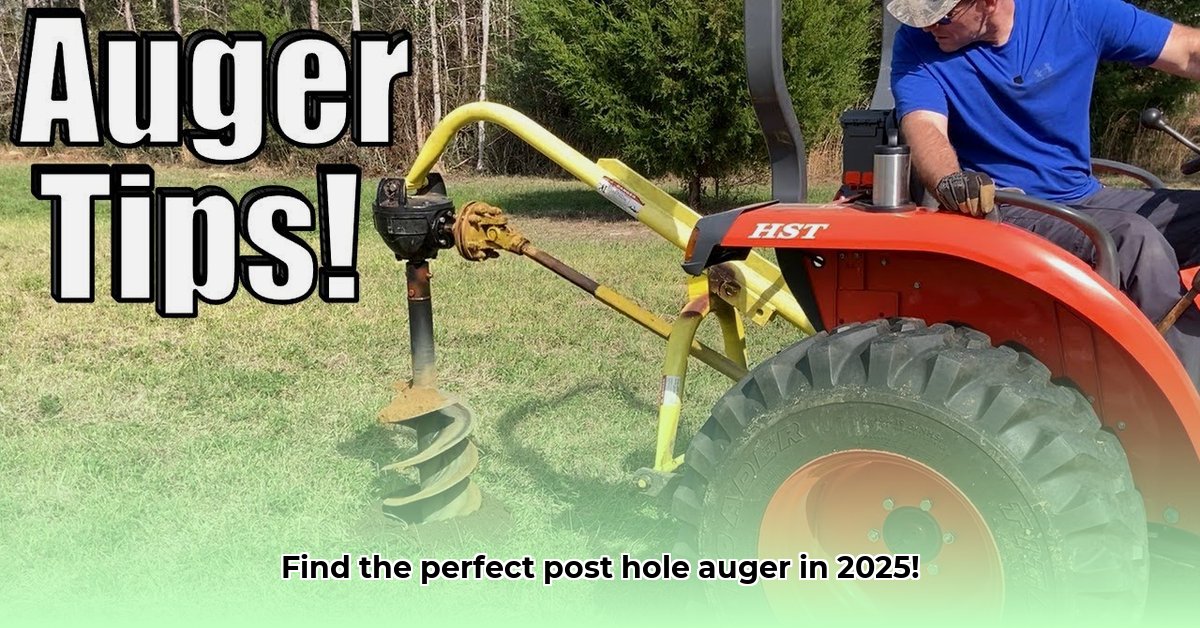
Digging post holes can be backbreaking work, but a sub-compact tractor with the right post hole auger can transform this arduous task into a manageable, even enjoyable, experience. This comprehensive buyer's guide will help you navigate the market, comparing top brands and offering practical advice to ensure you choose the best auger to meet your specific needs and budget. We'll delve into crucial factors like auger size, depth limitations, safety procedures, and maintenance, leaving you well-equipped to make an informed purchase. For more in-depth information, check out this helpful guide on tractor post hole diggers.
Choosing the Right Auger: Key Considerations
Before diving into specific models, it's crucial to assess your project requirements. Several critical factors will influence your choice:
- Project Scale: Are you building a small garden fence or planting an orchard? The scale directly impacts the required auger size and depth. A larger diameter auger will work faster for large posts but may be less maneuverable in tight spaces.
- Soil Conditions: Hard clay requires a more robust auger than loose soil. Consider this when comparing model specifications and power requirements.
- Desired Hole Depth: A standard 30-inch auger is suitable for many fences, but planting trees often necessitates longer augers or extensions. Knowing your target depth is paramount.
- Tractor Compatibility: This is non-negotiable. Verify that the auger's hitch type (Category 0 or limited Category I) matches your sub-compact tractor. Mismatched hitches render the auger unusable.
- Budget: Establish a realistic budget to narrow your options effectively. Prices vary considerably across brands and models.
Comparing Top Models: Worksaver vs. Land Shark
Worksaver and Land Shark are two leading brands in sub-compact tractor post hole diggers, both offering a range of models. However, specific specifications can vary, so always consult the manufacturer's details.
| Feature | Worksaver (Example Model) | Land Shark (Example Model) |
|---|---|---|
| Typical Auger Diameters | 6", 9", 12" | Varies; check specific model details |
| Standard Auger Length | 30" (extensions often available) | Typically 30"; extensions may be available |
| Hitch Type | Category 0 or limited Category I | Category 0 or limited Category I |
| Materials | High-strength steel | High-strength steel (grade may vary by model) |
| Weight | Varies by auger size; check specs | Varies by auger size and model; check specs |
User Reviews and Performance Analysis
Online reviews on platforms like Everything Attachments reveal generally positive feedback for both Worksaver and Land Shark augers. Users frequently praise their ease of use and durability. However, a recurring theme highlights a limitation: Auger depth. Many users express the need for longer augers, especially for deeper planting projects like large trees or substantial fencing. This limitation is a crucial factor to consider before purchasing. Remember, user experiences can vary based on specific models and soil conditions.
Hands-on Observations and Practical Advice
Personal experience with these augers mirrors the online feedback. While a 30-inch auger readily handles many fence post projects, it struggles with the depth required for larger trees. Extensions provide a viable solution, but compatibility is crucial; always ensure the extension is designed for your specific auger model and within the manufacturer’s recommended limitations. Overloading the equipment risks serious damage and potential injury.
A Step-by-Step Guide to Safe Auger Operation
Safety should always be the top priority. Never compromise on safety procedures.
Step 1: Securely attach the auger to your tractor's three-point hitch (double and triple checking all connections for a secure fit).
Step 2: Position the auger precisely over the intended hole.
Step 3: Carefully engage your tractor's PTO (Power Take-Off). Start slowly and monitor the auger's progress.
Step 4: Maintain a steady pace, avoiding forcing the auger, and adjust speed and depth based on soil conditions.
Step 5: Once the hole is dug, disengage the PTO and lift the auger gradually.
Crucial Safety Note: Always follow the manufacturer's instructions for both your tractor and auger. Never reach under a running auger. Wear appropriate safety gear, including gloves and eye protection.
Extending Auger Reach: Methods and Considerations
The limited depth capability of standard augers is a significant drawback. Several methods can address this:
Purchasing Longer Augers: This is often the most straightforward but potentially expensive solution. Select an auger with a length appropriate for your projects. Again, verify compatibility with your tractor.
Utilizing Extensions: Many manufacturers sell extensions specifically designed to increase the length of their augers. This is usually a more cost-effective option than purchasing a completely new auger. Thoroughly check compatibility to avoid issues.
DIY Extensions (Advanced Users Only): Constructing a custom extension requires significant mechanical skills and caution. Improperly constructed extensions pose a significant safety risk.
Renting Larger Equipment: For extensive or particularly deep projects, renting a larger tractor with a higher-capacity post hole digger might be the most efficient solution.
Conclusion: Choosing Your Ideal Post Hole Auger
Selecting the appropriate post hole auger depends on a careful analysis of your specific needs and budget. Don't rush the decision; take the time to compare models, read user reviews, and prioritize safety. With the right auger, you can transform the arduous task of digging post holes into a much more manageable and efficient process.